
The Awards Paradox
It is awards season–or more specifically awards application season. Is the effort and expense worth it?

Welcome to Dispatch #83 of The Audio Insurgent. This has been sitting around for almost two weeks waiting for me to finish it in the midst of December craziness. Now that you have it—my holiday can start! And I hope all of you get some time to rest and reboot in the coming days.
But before we get to our feature presentation…
[NIEMAN LAB PREDICTIONS FOR 2026] It was a bumper year for Nieman Lab predictions, with 50 more than previous years. That’s a lot of views into the future. What do they foretell? A lot of AI this and that. This reminds me of the early days of the Internet, when people would predict all kinds of crazy shit, because few really had any idea where things were heading. For the past nine years, I was invited to submit a prediction, and this year wrote about a phrase that’s also been thrown around a lot, the “HBO of podcasting.”
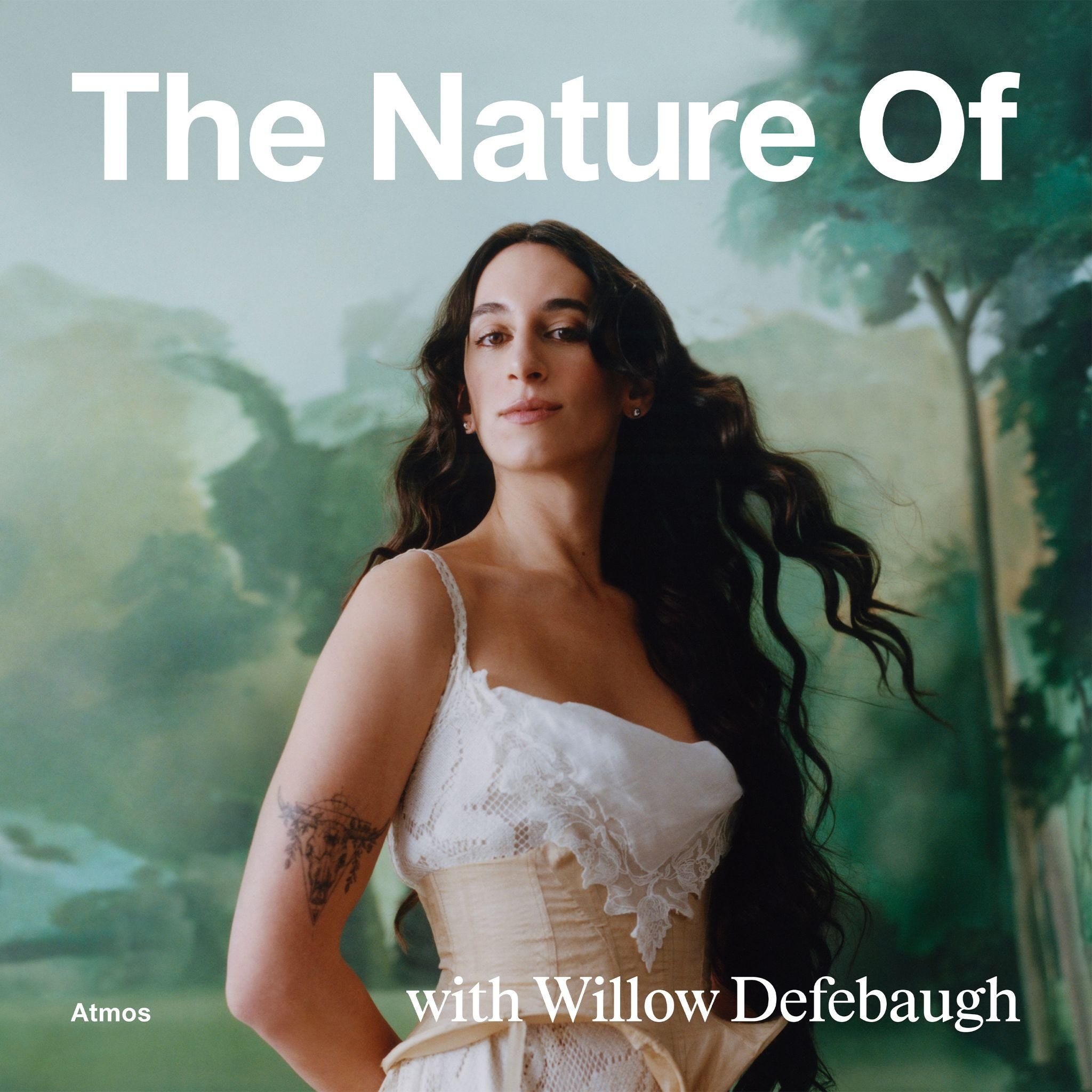
[BEST OF 2025] It was really exciting to see the show we create with Atmos included on the Apple Podcasts “Top Podcasts of 2025” list. The Nature Of also happens to be the only independent podcast on this year’s list. The show is a great example of keeping things simple so the complexity can be embedded in its ideas and the resulting conversation. At the surface, this show is a series of interviews and conversations. But what is contained in those conversations, and what it draws out in your own head, that’s where it gets very uniquely good. Lots of shows claim to make you think differently about what’s discussed, but this show actually delivers on that notion. And Willow has grown into a fantastic host. The show is a total joy and it’s nice to see it recognized.
Which then leads us to our main topic today, awards. Someone might accuse me of being hypocritical about awards, seeing that I just pointed out recognition for one of our shows.
But that’s also the point. The Apple Podcasts list was a total surprise. We didn’t apply. We didn’t lobby. We didn’t work any connections to make it happen. We didn’t get our friends, colleagues, and listeners to vote for us. We just got an email congratulating us. It happened organically. Something that’s pretty rare in the awards space.
Let’s continue…
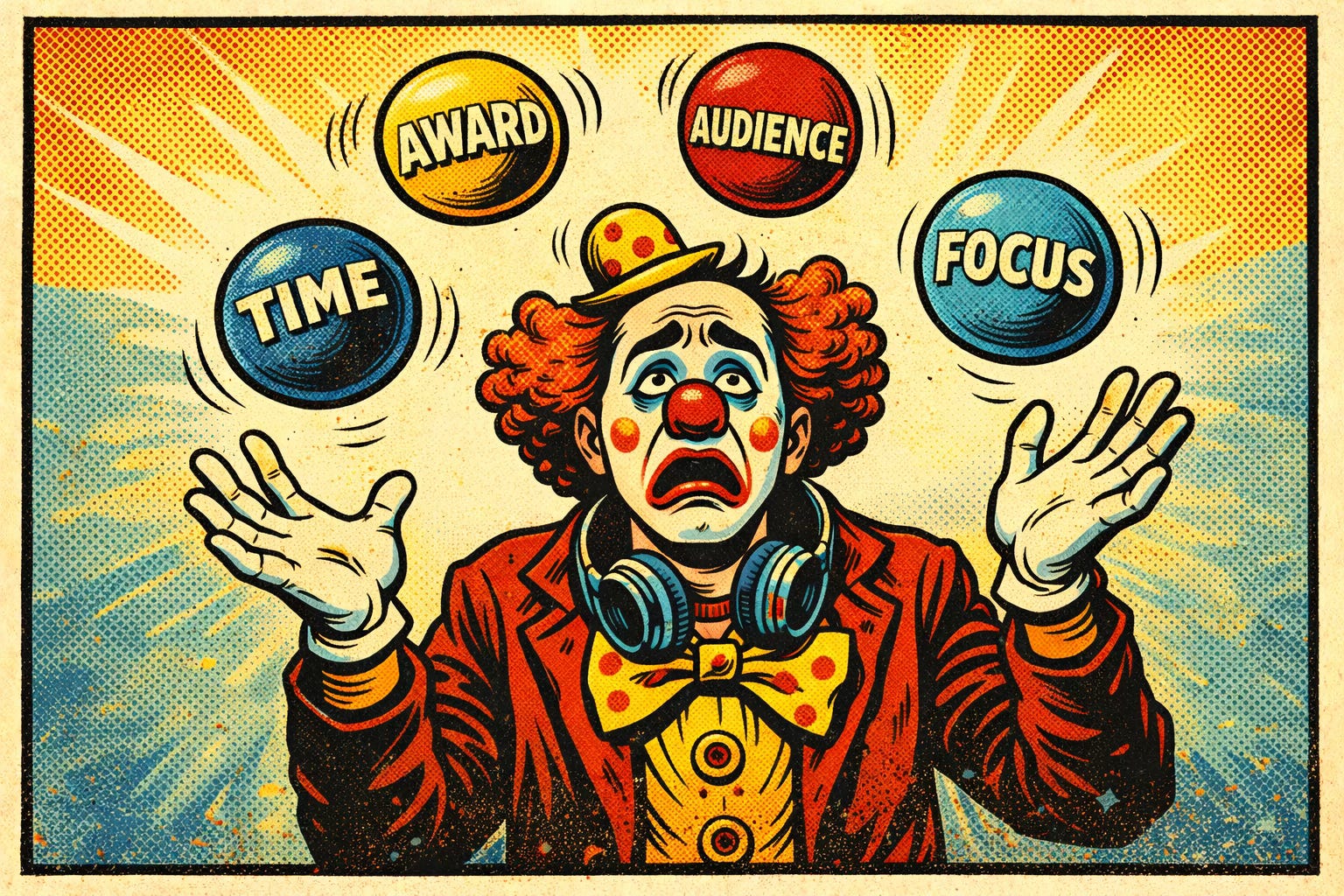
[THE AWARDS PARADOX] The recent debacle surrounding the inaugural nominations and finalists for the new Golden Globe Award for podcasting has had me thinking—again—about awards.
Even the people who are closest to me often get this wrong: they think I hate awards. I don’t. Awards can be exciting. Awards can be something to brag about. Awards can be validating.
But it is equally true that a surprising number of them are more than a bit scammy, and often an expensive distraction and waste of time for the creators who pursue them.
I know I hold a contrarian and skeptical view here. So much so that I haven’t applied for awards for our projects in years, and I often discourage clients and partners from investing time and resources into them. My argument is simple: awards can be emotionally real while also being strategically irrelevant.
Those who feel otherwise argue that awards create tangible value. They suggest that winning raises a show’s profile, builds credibility, attracts better guests, generates press, and opens doors for creators and networks alike. But this is where the argument loses me. Can anyone demonstrate where that has actually happened? Where a previously unknown or underrecognized podcast wins an award and the benefits are more than circumstantial or subjective?
I’m not talking about how it felt. I’m talking about outcomes. Convincing evidence would be objective and measurable: a clear before-and-after change in audience behavior; earned media that isn’t just an awards roundup; a contract, check, or opportunity directly tied to the win. I’ve asked this question of many people over many years, and I’m still waiting to see that evidence. Winning feels good—and bragging feels good—but does anything actually change about a show’s prospects?
More after the jump
Introducing The Analog Dispatches of The Audio Insurgent - Only For Paid Subscribers
You get to read this for free, but it isn’t free to make–writing these dispatches and responding to your queries takes up a lot of time. But you can make it worth it by becoming a paid supporter of The Audio Insurgent for as little as $5.
To go along with my fascination with writing instruments, ink, and paper–I’ve created something to offer to my paid supporters: a hand-written bespoke dispatch of The Audio Insurgent, written to only one person. One of a kind. You can even pick the topic–or just leave it to me to write about whatever is on my mind at that moment.
Here’s a picture of the first one:
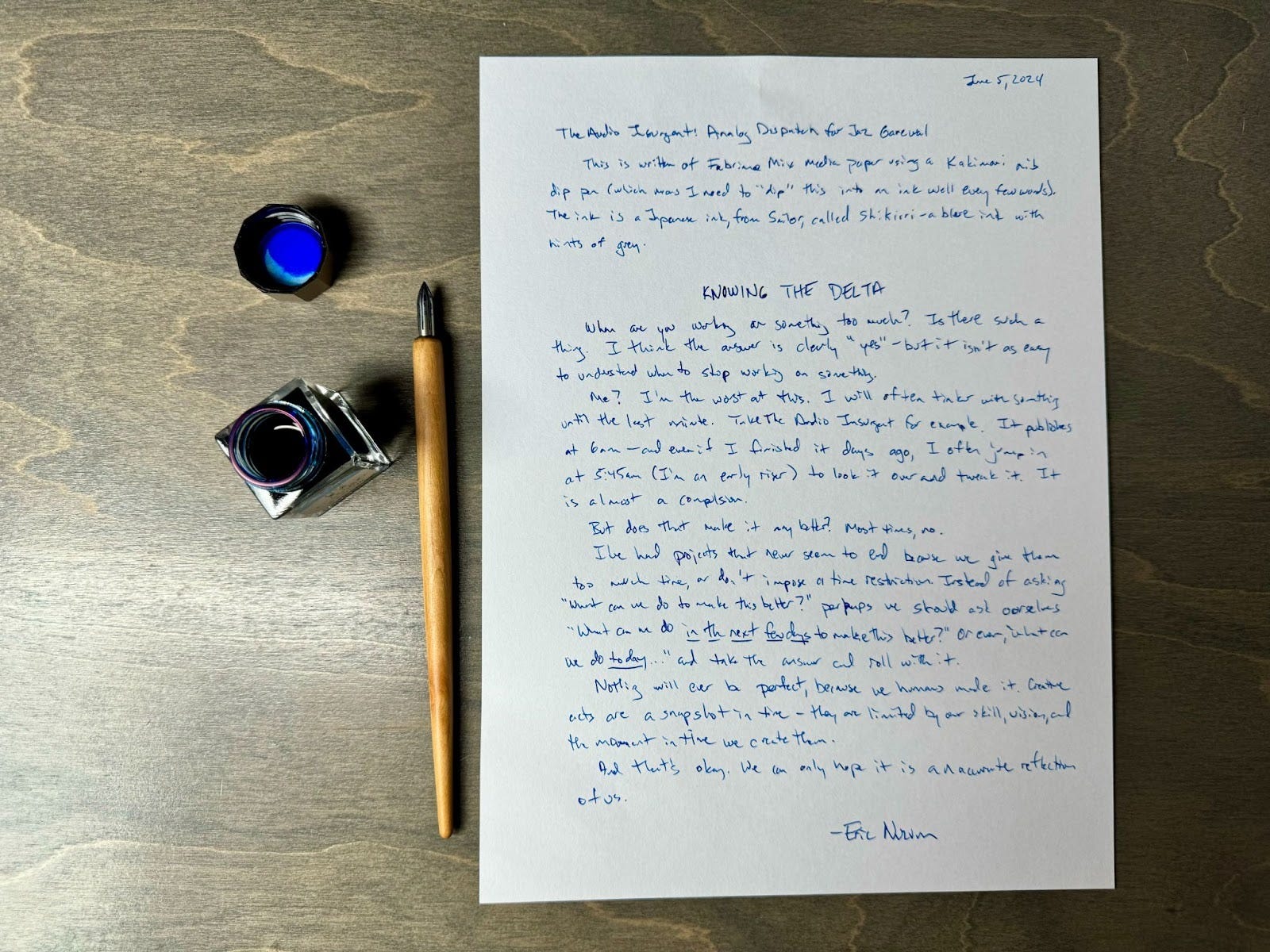
Yes, it is kinda goofy…and kinda hella cool to create and to receive. If you’d like yours, just hit the button below to upgrade to a paid subscription at any level–they start at just $5.
Plus, you’ll be supporting this newsletter and encouraging me to do more writing on digital audio. Also, you’ll be the first to get these dispatches–sometimes days before anyone else. Info on how to get your Analog Dispatch is in the welcome note when you upgrade.
And thanks.
Okay, so back to awards.
It’s important to say that there are awards that credibly signal excellence. The Peabody Awards, the Gracie Awards, the duPont-Columbia Awards, and a handful of others genuinely convey “best of the best.” Notably, their entry fees are often surprisingly reasonable. These awards tend to be selective, transparent, and widely understood. They mean something.
But once you move beyond that small tier, podcast awards quickly drift into a different space. Many of the largest awards outside that group are run as for-profit entities. Entry fees can run hundreds of dollars per submission, sometimes topping $1,200, with little transparency around judging criteria nor who is actually making the selection. Then there are the bottom feeders: awards that require creators to lobby friends and listeners to vote, often through registration systems that harvest personal data, on top of already steep entry fees. All of this, just to be one of two hundred people invited to give a five-word acceptance speech.
At that point, it’s worth asking a simpler question: if many awards don’t reliably change outcomes for creators, who are they actually for? Often, the answer isn’t the audience…and not always the winners either. Awards primarily serve the institutions that grant them. They generate revenue, create marketing funnels, build mailing lists, and reinforce the awarding body’s relevance inside the industry. None of that is scandalous, or even universally wrong. But it does mean the value exchange is frequently misunderstood by creators, who often assume awards exist to elevate their work, rather than to sustain the organizations behind them.
The biggest problem with award submissions, though, is the opportunity cost that almost no one talks about. Entry fees are the visible part, but rarely the most expensive. The real cost is time: pulling clips, tailoring language for judges, chasing deadlines, spreading focus across categories. That time comes from somewhere—usually from development, audience growth, or simply making the work better. There’s also a quieter cost. Once creators start thinking about how something will play to a jury rather than to an audience, priorities shift. And taking your eye (and your obsession) off the audience almost never works out in the long run.
So why does belief in awards remain so strong? Part of it is inheritance. Podcasting absorbed its awards mythology wholesale from film, television, and journalism—industries built on scarcity, gatekeepers, and centralized distribution. Podcasting works differently, but the story stuck. And then there’s the human part. Creative work exists in a fog of delayed feedback and ambiguous success. Awards offer clarity, even when that clarity is artificial. They turn uncertainty into a verdict. That feeling is real…and powerful enough to keep the myth alive.
None of this is an argument that awards are pointless or should be avoided on principle. There are moments when they make sense. For some shows, selective participation in a small number of high-profile awards can reinforce reputation rather than chase it. The key word is selective. Awards that are difficult to win, transparent in their criteria, and broadly recognized tend to mean something. The rest deserve far more skepticism than they usually get.
Before submitting, it’s worth stopping to ask a few unromantic questions: Who is this award actually for? What would winning materially change about our podcast’s prospects? What does it really cost—not just in money, but in time, focus, and creative energy?
Awards don’t make shows successful. At best, they reflect success that’s already happened. At worst, they distract creators from the only thing that reliably does: making work audiences actually want to spend time with.
Okay, that’s it for today.
Thousands of people read this newsletter without even a free subscription. If this was forwarded to you or you read this online, would you mind subscribing?
If you are a regular reader of The Audio Insurgent, I hope you’ll consider doing your part by supporting this work with a small donation. And if that’s too much, you are also always welcome to buy my book or (even better) buy me a beer.
Make great things. I’ll be listening. And happy holidays!
--Eric